Dearest Readers,
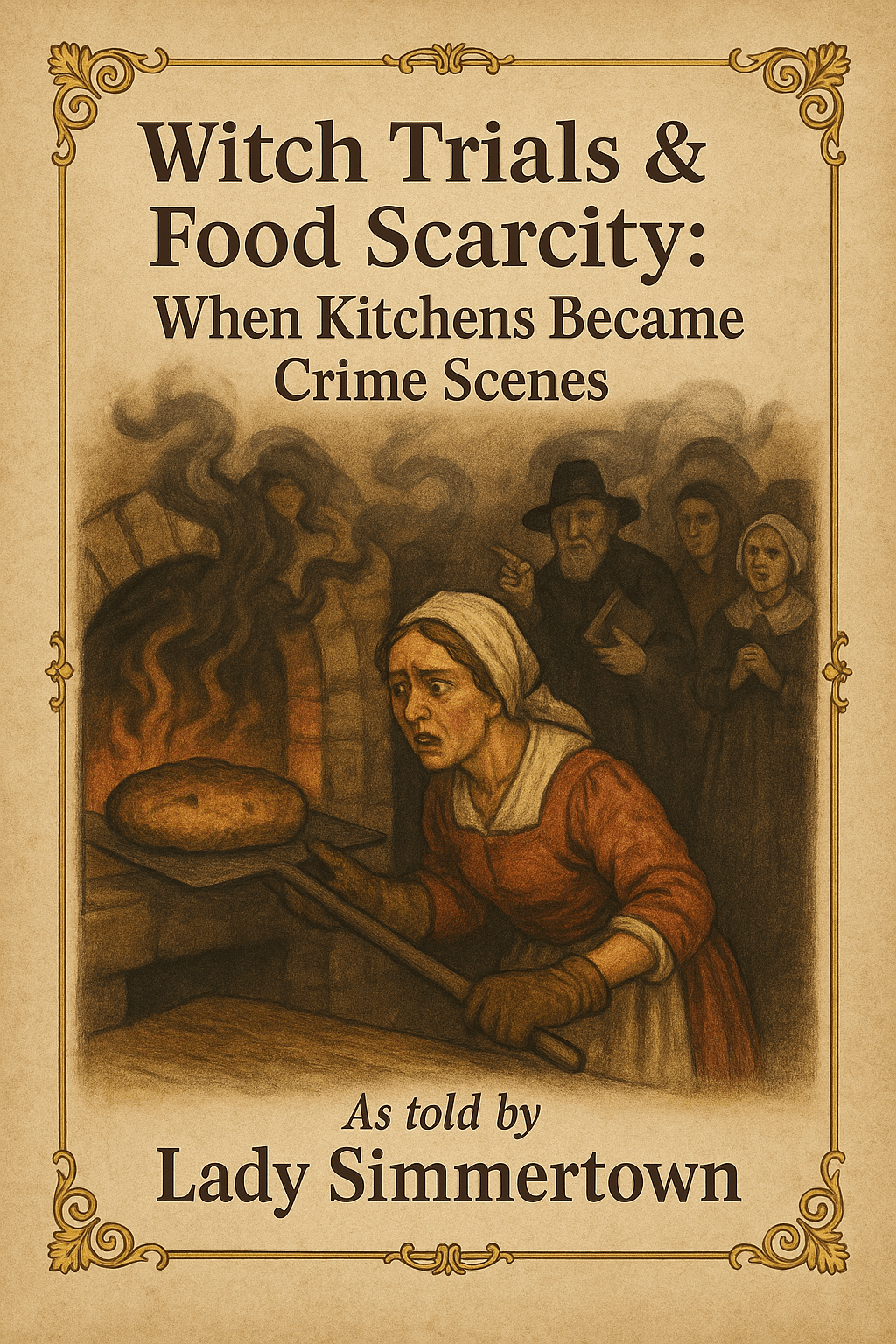
Imagine a world where a loaf of bread that refused to rise or a bucket of milk that soured overnight was not simply a kitchen failure but a summons to the gallows. Between the 14th and 17th centuries, when famine was frequent and superstition plentiful, the hearth became less a sanctuary than a stage for suspicion. Hunger sharpened tempers, faith demanded explanations, and thus the kitchen was transformed into a crime scene.
Bread That Refused to Rise
Bread was the very foundation of European life. In some regions, peasants consumed up to two pounds of bread a day; it was not a luxury but survival itself. When that survival failed to appear from the oven, panic surged. In the Rhineland and Bavaria, neighbors eyed one another with suspicion when dough remained flat, convinced that unseen curses were kneading alongside the yeast.
This fear was not born in ignorance alone but fueled by authority. The Malleus Maleficarum, printed in 1487 by Dominican inquisitor Heinrich Kramer, insisted that witches could prevent bread from rising and spoil any attempt at household provision. Such texts carried weight; they were second only to the Bible in popularity. When famine struck, every collapsed loaf was less a culinary failure than supposed proof of Satan’s hand.
And if the bread failed, what chance had the milk?
Milk That Soured Overnight
Milk, that most fragile staple, turned quickly in a world without chill or pasteurization. Yet while heat and bacteria offered a perfectly natural explanation, communities turned to witchcraft. Sour milk, butter that would not churn, or cream that refused to thicken were all attributed to malefic interference.
In rural Denmark, records describe women accused of “stealing milk” with enchanted ropes tied in knots, siphoning cream from distant cows. In Germany, confessions extracted under torture spoke of witches rubbing ointments on cattle to dry their udders. The smallest dairy misfortune rippled into calamity.
Across the Atlantic, suspicion followed. Margaret Jones of Charlestown, Massachusetts, was the first person executed for witchcraft in New England, in 1648. Neighbors claimed her very touch curdled beer, soured milk, and poisoned animals. Historians now note the colony’s poor preservation methods and harsh environment, but at the time, these were invisible beside the spectacle of accusation. She was hanged, her name lost among many others sacrificed on the altar of spoiled milk.
And yet, these tragedies were not born solely of superstition, hunger was always the accomplice.
Famine Fans the Flames
The Great Famine of 1315–1317 drowned fields in endless rain, emptying granaries and driving entire regions into starvation. Though witch trials had not yet reached their fever pitch, the suspicion that storms were conjured by malign hands began here.
By the 16th century, the Little Ice Age ushered in shorter growing seasons and failed harvests. Communities, desperate for explanations, turned to witchcraft. In 1428, the Valais trials of Switzerland swept through entire villages, accusing women of destroying vineyards and blighting grapes. In famine-struck Scotland during the 1590s, courts claimed witches had raised storms and kept butter from “coming in the churn.”
Food was scarce, tempers short, and the kitchen provided the perfect scapegoat.
From Hearth to Gallows
By the mid-17th century, this rhythm had hardened into a grim routine. In Essex, England, amid civil war and hunger, Matthew Hopkins, the so-called “Witchfinder General”, wrung confessions from the desperate. Testimonies described bewitched ovens, barren pans, and livestock struck dry. In only three years, more women were hanged under his watch than in the previous century.
Denmark and Sweden were no safer. In Copenhagen, brewing and baking mishaps appeared in indictments. Tales of “milk-stealing witches” tying ropes into knots persisted well into the 17th century. A woman whose churn overflowed while her neighbor’s remained empty risked far more than envy.
The hearth itself, once the emblem of warmth and sustenance, had become an executioner’s witness stand.
Hunger’s Cruel Legacy
And so, dearest readers, we must acknowledge this bitter truth: famine wrote the script, and fear supplied the actors. Spoiled bread, soured milk, ruined butter, these were not conjured by Satan but by storms, rot, and want. Yet in a world unwilling to embrace chance, kitchens became crime scenes, and cooks became criminals.
So next time your sourdough sulks or your cream turns unexpectedly, be grateful your punishment is but disappointment. In centuries past, your apron might have doubled as your shroud.
Ever your scandalous chronicler of famine and flame,
Lady Simmertown
For the Skeptics & the Scholars
- Malleus Maleficarum (1487) — Heinrich Kramer’s manual tying spoiled bread and milk to witchcraft.
- The Great Famine (1315–1317) — crop failures across northern Europe, planting seeds of suspicion.
- Valais Witch Trials (1428, Switzerland) — early mass trials accusing women of blighting vineyards.
- North Berwick Trials (1590s, Scotland) — famine-fueled accusations of storms and failed butter churns.
- Margaret Jones (1648, Massachusetts) — first executed for witchcraft in New England.
- Matthew Hopkins (1644–1647, England) — the “Witchfinder General,” infamous for kitchen-based accusations.
- Scandinavian Folklore — witches accused of “stealing milk” with knotted ropes.



 Butter, Ink & Indiscretion
Leave a comment